

EU PPWR and Luxury Paper Boxes: What Export Brands Need to Know Before 2030
EU PPWR and Luxury Paper Boxes: What Export Brands Need to Know Before 2030
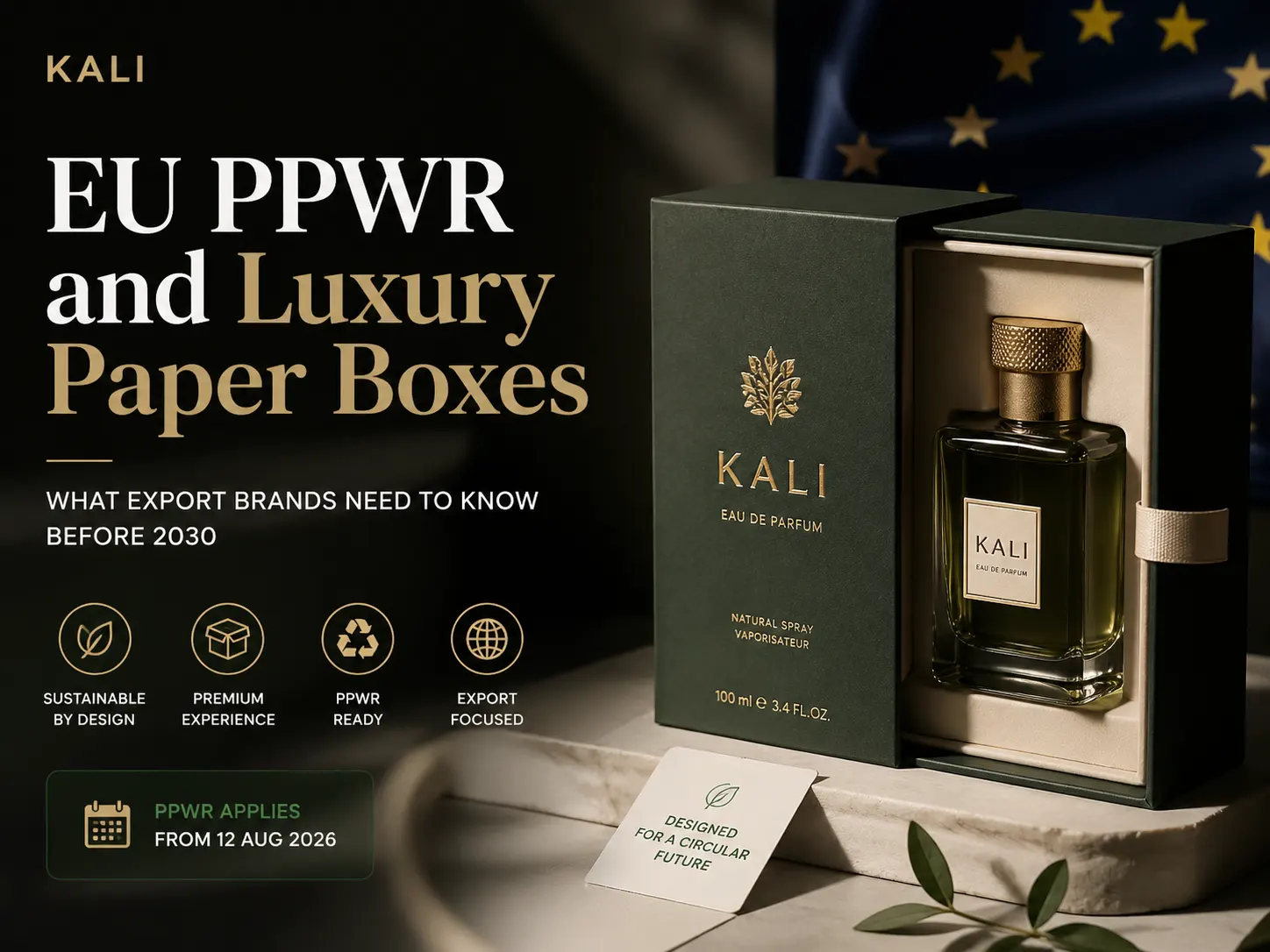
The EU PPWR is not just a regulatory update sitting somewhere in Brussels. For export brands using luxury paper boxes, it is going to affect everyday packaging decisions: box size, material combinations, inserts, finishes, claims, and how clearly a package can be explained before it enters the European market.
In this article:
Why PPWR Matters for Luxury Paper Boxes
For years, premium packaging had more room to be generous. A rigid box could be thicker than necessary. A gift set could use several layers. A drawer box might include magnets, foam, ribbons, films, coatings, metallic finishes, and then another shipping carton around all of it.
That kind of packaging can still look impressive. The question is whether it will still be easy to defend under the new European packaging direction.
The EU Packaging and Packaging Waste Regulation, often shortened to PPWR, entered into force in 2025 and will generally apply from 12 August 2026. The European Commission describes the regulation as covering all packaging placed on the EU market and setting requirements around manufacturing, composition, recyclability, recoverability, reuse, and packaging waste prevention.
PPWR does not make premium packaging impossible. It simply raises the standard. A luxury paper box can still feel refined, but the design needs clearer logic behind its structure, materials, inserts, and finishing choices.
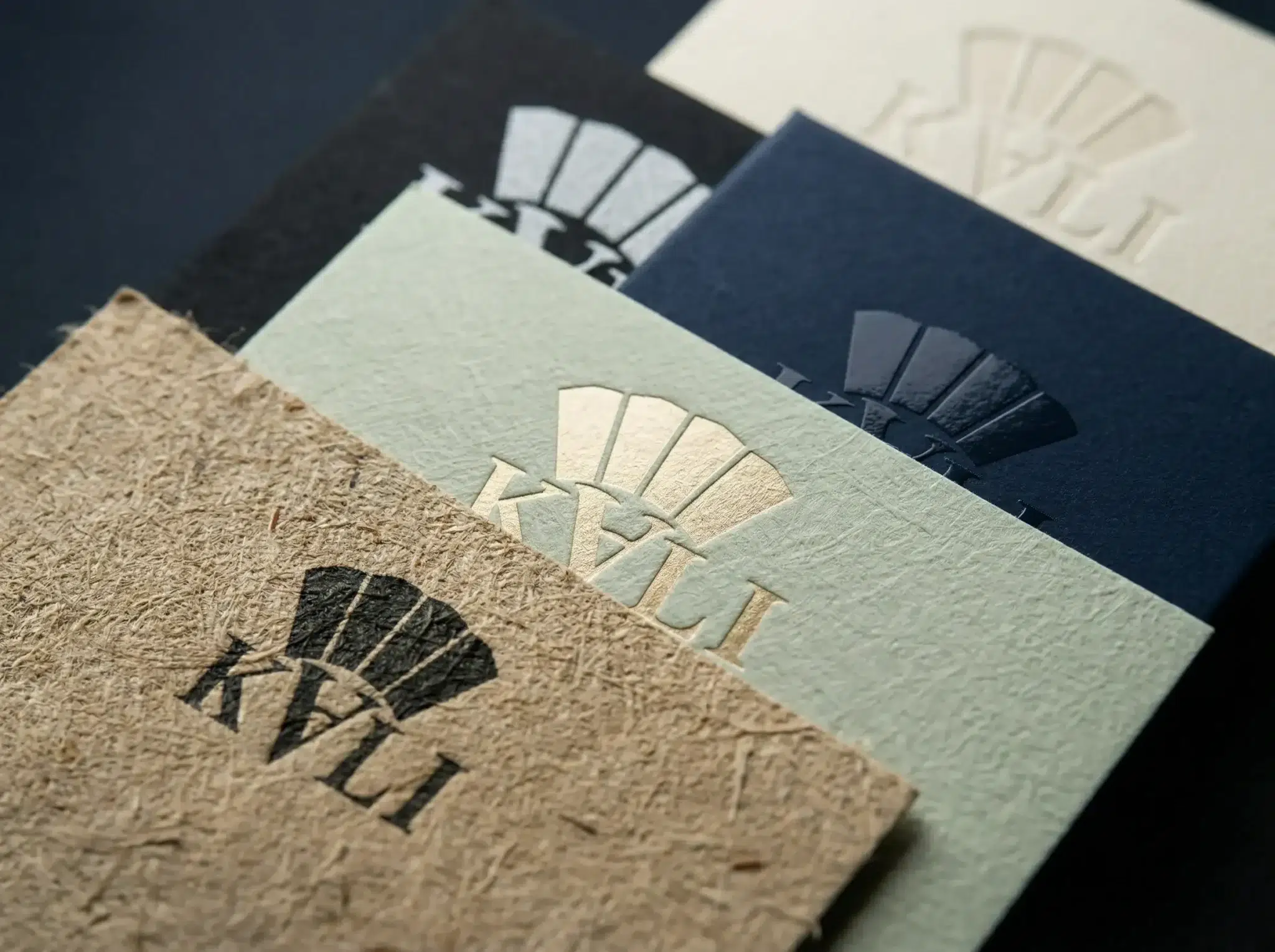
At KALI, we see this less as a “compliance topic” and more as a packaging discipline topic. Export packaging now has to work on two levels at the same time: it has to carry the brand, and it has to make sense when someone asks what it is made from, why it is built that way, and how it should be handled after use.
What Export Brands Should Prepare Before 2030
2030 may sound far away. In packaging development, it is not.
A box structure chosen today can stay in a product line for years. A perfume set, jewelry box, skincare kit, or premium retail gift box may go through sampling, retail review, importer feedback, artwork revision, material testing, and several reorder cycles before the brand is ready to change it again.
That is why waiting until the last minute is risky. By the time a buyer or importer asks for a cleaner packaging structure, the brand may already have invested in tooling, photography, retail displays, and launch materials.
For brands selling into Europe, the shift is fairly clear: packaging needs to be easier to justify. Not only visually. Structurally. Materially. Commercially. A box should still look premium, but it should not depend on unnecessary bulk or hard-to-separate materials to create that impression.
KALI editorial readiness score: 1 = low priority · 5 = urgent for export brands
Recyclable paper-based structure 5.0 / 5
Reduced material layers 4.8 / 5
Clear material and disposal claims 4.6 / 5
Lower-plastic inserts and trays 4.4 / 5
Documentation-ready packaging design 4.2 / 5
Where Luxury Packaging Creates Risk
Luxury packaging does not usually create problems in one obvious place. The risk is often hidden in the details.
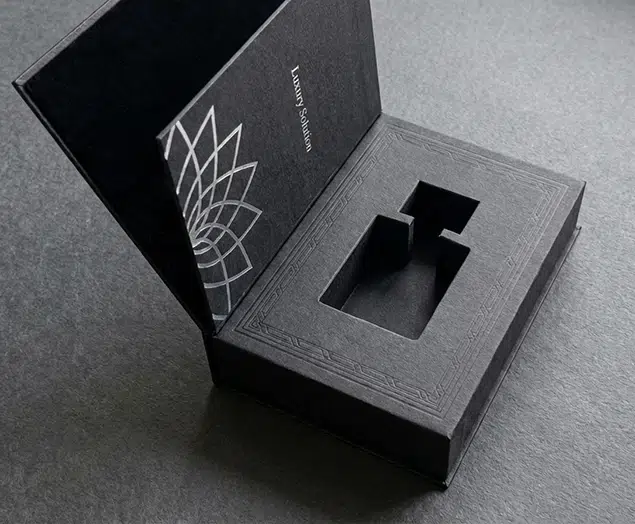
A magnetic closure feels convenient, but it can make separation harder. A laminated surface may look clean, but it can affect recyclability depending on the material and local recycling stream. A plastic tray may hold the product perfectly, but it can weaken a paper-based packaging story. A large rigid gift box may look generous, but empty space is becoming harder to explain.
None of these choices are automatically wrong. That is the important part. PPWR does not mean every premium box has to become plain brown paper. It does mean export brands should stop treating extra layers as the default way to create value.
In practice, the strongest premium effect often comes from proportion, texture, opening feel, and precision. Adding another material is not always the best way to make a box feel expensive.
This is where luxury paper box packaging needs to evolve. A rigid paper box can still feel elegant. A drawer box can still feel ceremonial. A folding carton can still look polished. The difference is that the structure has to be more intentional from the beginning.
How KALI Approaches PPWR-Aware Premium Packaging
When we discuss European packaging projects with export brands, we usually do not start with the regulation wording. We start with the product.
Is it fragile? Heavy? Small? High-value? Refillable? Is it sold online, in retail, or as a gift set? Does the customer keep the box, or does the box become waste within minutes? These questions are not glamorous, but they shape the packaging more than most mood boards do.
Once the product job is clear, the packaging choices become easier to judge. A thick rigid box may be justified for a fragile high-value item. A large box with a small product and several decorative layers may not be. A molded paper insert may work well in one category and fail in another if the product needs a different level of protection.
| Packaging Area | What Export Brands Should Review | KALI Design Direction |
|---|---|---|
| Box structure | Is the box larger, heavier, or more layered than the product actually needs? | Use tighter proportions, cleaner opening logic, and paper-based engineering where it supports both protection and presentation. |
| Surface finish | Do lamination, foil, coating, or special effects create avoidable recycling or separation issues? | Lean more on paper texture, embossing, debossing, restrained ink, and finishes that support the material story. |
| Inserts | Are foam, plastic trays, or mixed-material inserts really necessary for the product? | Consider molded pulp, folded paperboard, or removable paper-based inserts when the protection requirement allows. |
| Claims | Are sustainability statements specific enough to be trusted by buyers and consumers? | Use clear language around material, recyclability, recycled content, or plastic reduction only when the package supports it. |
| Export readiness | Can the packaging choices be explained to buyers, importers, and compliance teams? | Build packaging that is not only attractive, but easier to document, explain, and adapt for different market requirements. |
A simple example: a beauty brand may ask for a heavy rigid box because it feels premium. Sometimes that is the right decision. Other times, the same premium feeling can be created through cleaner proportions, better paper texture, controlled embossing, a molded paper insert, and a precise opening experience.
That kind of redesign does not make the package less luxurious. It makes the luxury less dependent on excess.
What This Means for Different Export Categories
Different categories will feel the pressure in different places.
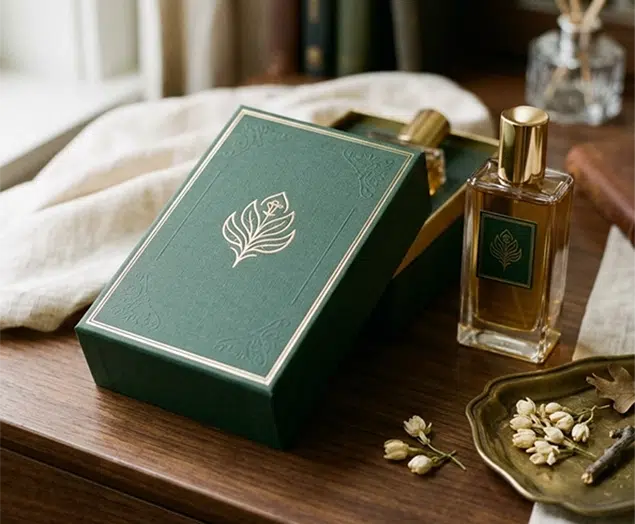
For cosmetic packaging, the issue is often mixed materials: rigid boxes with plastic trays, mirrors, foam pads, magnets, films, or decorative coatings. For jewelry packaging, the challenge is keeping the keepsake feeling without building a box that feels wasteful. For perfume packaging, brands may need to review box volume, inserts, and finishing choices. For gift packaging, the question is whether the unboxing moment justifies the amount of packaging used.
The brands that start early will have more room to test. They can compare paper structures, insert alternatives, lower-impact finishes, and clearer disposal language while there is still time to adjust the product line calmly.
One detail is easy to miss: packaging reviews are much easier before a retailer, distributor, or importer raises the issue. Once a launch date is close, every design change becomes more expensive.
A Practical Checklist Before 2030
Before choosing or updating a luxury paper box for the European market, it is worth asking a few plain questions.
- Is every material necessary? Review magnets, films, trays, foam, ribbons, sleeves, and coatings.
- Can the box be easier to recycle? Avoid design choices that make separation harder without adding real value.
- Is the package larger than it needs to be? Premium does not have to mean oversized.
- Can plastic inserts be reduced or replaced? Molded pulp, folded paperboard, or paper-based structures may work in many categories.
- Are the claims specific? “Eco-friendly” is too vague. Material facts are stronger.
- Can buyers understand the packaging story quickly? A good package should be easy to explain, not just nice to photograph.
- Has the packaging been tested? Check compression, drop performance, scuffing, humidity, opening feel, and product fit.
Final Thought: Luxury Will Need Better Logic
The future of luxury packaging in Europe is not plain. It is more disciplined.
Brands will still need beautiful boxes. Customers will still enjoy premium unboxing. Retail buyers will still care about shelf impact. None of that disappears under PPWR.
What changes is the standard behind the beauty.
Before 2030, a luxury paper box should be easier to justify: in material choice, recyclability, structure, waste reduction, and export readiness. That does not make packaging less emotional. It simply gives the emotion a stronger foundation.
For brands preparing for Europe, KALI can help develop luxury paper box solutions that keep the premium feeling while moving packaging closer to the next regulatory and market reality.
Plan Your PPWR-Ready Luxury Packaging


Top 10 Creative Cosmetic Packaging Design Ideas & illustrations 2023 | Luxury-Paper-Box.Com
How the Right Perfume Packaging Sells the Scent
5 Eyewear Packaging Trends Shaping 2026