

9 Printing Techniques to Make Perfume Boxes Look More Luxurious
The fragrance industry is intrinsically tied to the concept of invisible allure. A scent cannot be seen, heard, or touched until it is released from its carefully crafted flacon. Therefore, the visual and tactile responsibility of conveying the perfume’s essence, its price point, and its brand narrative falls entirely on the custom made perfume packaging. The moment a consumer lays eyes on a fragrance on a retail shelf, or unwraps it from an e-commerce delivery box, a silent but profound dialogue begins. This dialogue is articulated through advanced perfume box printing techniques and meticulously chosen packaging surface process methods.
In the hyper-competitive landscape of luxury cosmetics and fragrances, standard packaging printing is no longer sufficient to capture consumer attention. Brands must leverage sensory marketing, engaging the consumer’s sense of touch and sight simultaneously before the sense of smell is ever activated. This comprehensive exploration delves deep into the specific materials, techniques, and structural innovations that transform a simple cardboard container into an exquisite prelude to the fragrance within.
By understanding the profound psychological and aesthetic impact of each packaging surface process, brands can craft custom made perfume packaging boxes that resonate with sophistication, exclusivity, and undeniable luxury. European Commission Circular Economy Directive Tier 1: Government Authority
1. The Foundation of Elegance: Specialty Papers in Packaging Printing
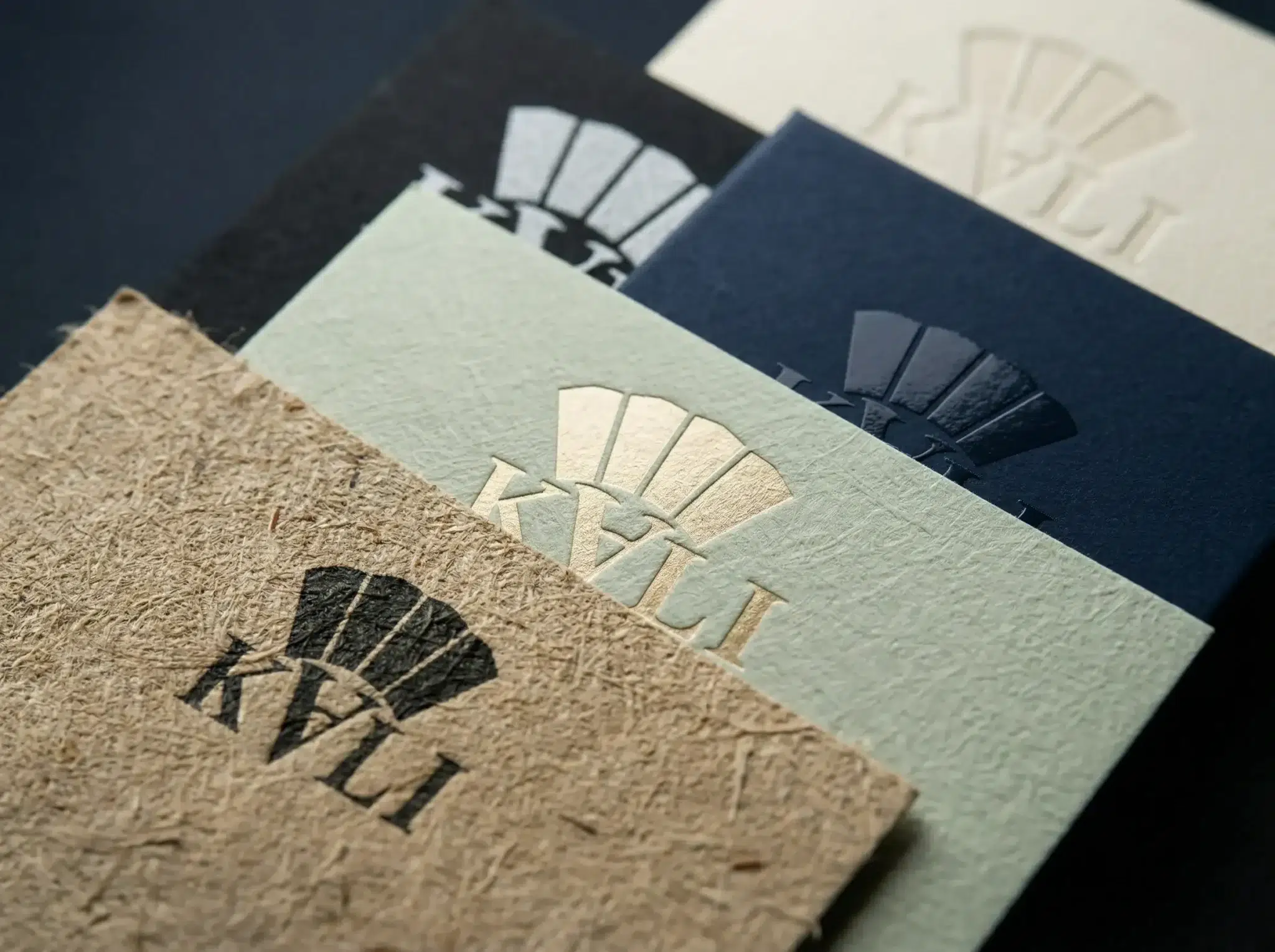
Before any ink is laid down, before any foil is heated, and before any die is cut, the choice of the foundational substrate dictates the entire character of the custom made perfume packaging boxes. Standard coated papers and bleached boards offer a smooth, predictable canvas for conventional perfume box printing, but true luxury almost always begins with specialty papers. These materials fundamentally alter the baseline of the packaging printing experience, shifting it from a visual medium to a deeply tactile one.

Selecting specialized materials—such as premium art paper, heavily textured embossed paper, or botanical and grass-infused paper—provides an inherent, natural texture, a distinct base color, and a raw, authentic tactile quality. The beauty of these specialty substrates lies in their ability to exude a high-end, sophisticated ambiance without the need for overly complex perfume box printing graphics or excessive coloring. The material itself becomes the core message of the brand.
The primary advantage of utilizing specialty papers in custom made perfume packaging boxes is the unique tactile sensation and the rich, multi-layered visual depth they provide. These papers naturally elevate the organic, earthy, or minimalist aesthetic of a brand, making them exceptionally well-suited for high-end beauty cosmetics, niche perfumery, and culturally inspired creative products. A textured surface invites the consumer to run their fingers over the box, creating a moment of physical engagement and lingering interaction that standard glossy packaging printing simply cannot achieve.

2. The Tactile Dimension: Embossing and Debossing
Once the ideal substrate is chosen, the next critical step in creating breathtaking custom made perfume packaging boxes involves altering the physical topography of the paper itself. This is where mechanical pressure becomes a crucial packaging surface process. By manipulating the paper fibers under immense force, designers can create light-catching shadows and physical protrusions that elevate the entire perfume box printing outcome from a flat image to a sculpted object.
The Art of Embossing: Raising the Standard
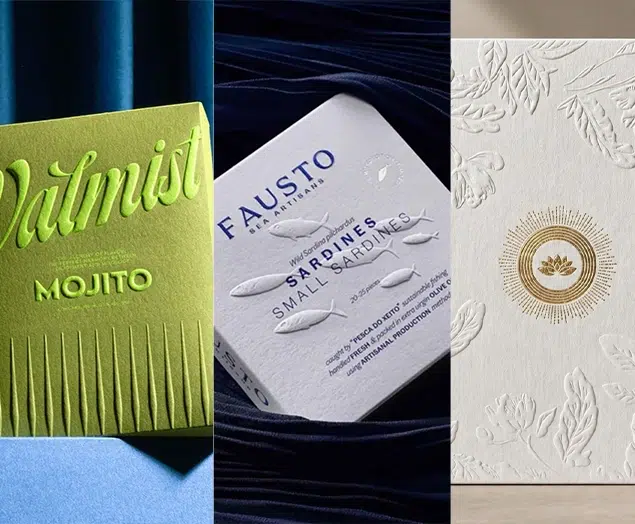
Embossing utilizes precisely machined male and female metal molds to press the paper or cardboard from underneath, creating a raised, three-dimensional texture on the surface. This packaging surface process can mimic intricate patterns such as woven fabric textures, natural wood grains, complex floral motifs, or sharp, modern geometric lines. It introduces a profound sense of physical depth to the packaging printing project.

The key advantage of this specific packaging surface process is its independence from printing inks. It is a highly eco-friendly method that adds a delicate, refined tactile quality. It fundamentally enhances the physical interaction a consumer has with the custom made perfume packaging boxes, successfully avoiding the flat, monotonous look of standard glossy finishes.
The Nuance of Debossing: Introverted Elegance
Debossing operates on the exact inverse principle of embossing. Using a solid concave mold, the design, typography, or pattern is pressed downward heavily into the surface of the paper, creating a sunken, indented texture. This technique is equally vital in the realm of premium packaging printing, though it communicates a very different psychological message.

Debossing offers a much more introverted, restrained visual aesthetic. The texture feels grounded, calm, and deeply permanent—akin to words carved into stone. It is particularly suitable for creating large-area background textures or implementing low-profile, minimalist decorative elements on custom made perfume packaging boxes. Additionally, a significant functional advantage of this packaging surface process is that it avoids the friction and scratch risks associated with raised embossed elements.
3. Sculpting the Silhouette: The Architectural Magic of Die-Cutting
While standard perfume box printing focuses heavily on colors, and the packaging surface process focuses on micro-textures, die-cutting focuses entirely on the macro structural architecture of the custom made perfume packaging boxes. The physical shape of a box is its most immediate defining characteristic, recognizable from across a retail floor.

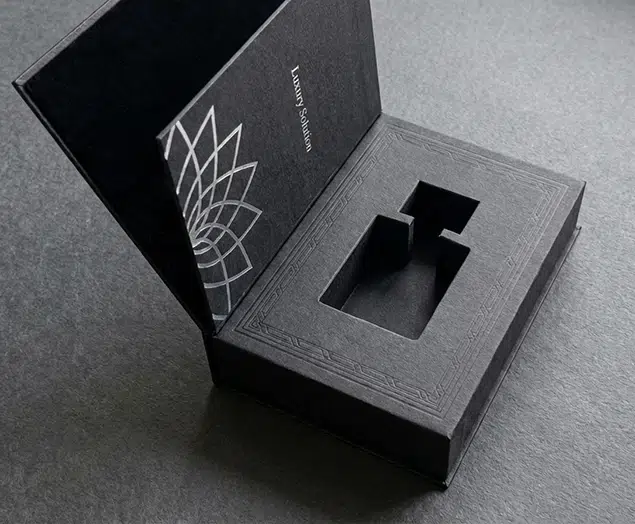
Die-cutting employs incredibly sharp, precision-crafted steel knife molds (dies) to cut the packaging material into irregular shapes, intricate hollowed-out patterns, or specialized structural forms. This process allows fragrance brands to completely break free from the traditional, rigid, and often boring boundaries of standard rectangular packaging printing.
The sheer flexibility of die-cutting is its greatest asset in perfume box printing. It enables the creation of transparent display windows (allowing a seductive peek at the glass perfume bottle within), highly unusual geometric box shapes (such as hexagons, pyramids, or asymmetrical folds), and complex three-dimensional pop-up structures that unfold dramatically upon opening. By incorporating advanced die-cutting into the design phase, custom made perfume packaging boxes achieve an unparalleled level of brand recognition.
4. The Play of Light: Spot UV and Reverse UV Technologies
The deliberate manipulation and interplay of light and shadow is a critical component of high-end packaging printing. By controlling exactly how ambient light reflects off different areas of the custom made perfume packaging boxes, designers can guide the consumer’s eye, emphasize hierarchy, and create a highly dynamic visual experience. This is achieved through sophisticated packaging surface process applications involving ultraviolet-cured liquid coatings.
The Precision of Spot UV

Spot UV involves applying a crystal-clear, exceptionally high-gloss UV liquid coating to very specific, localized areas of the printed surface. Once exposed to intense ultraviolet light on the production line, this coating cures instantly, forming a slightly raised, brilliantly glossy finish that contrasts sharply with the surrounding matte or soft-touch paper.
The primary benefit of this packaging surface process is its unparalleled ability to provide localized illumination and a strong three-dimensional effect without altering the underlying color. Spot UV is exceptionally effective for highlighting key focal points in perfume box printing, such as the brand logo, the elegant name of the fragrance, or intricate, sweeping background patterns.
The Dramatic Contrast of Reverse UV

Reverse UV is a significantly more complex, dramatic, and expensive packaging surface process. It begins by printing a full-coverage base layer of high-gloss UV varnish over the entire substrate. Following this, a specialized matte oil or matte ink is selectively printed over the glossy base, explicitly avoiding the areas meant to remain shiny.
This “glossy plus matte” contrasting effect is visually arresting. By utilizing the extreme difference in gloss levels, Reverse UV highlights specific graphics or typography with incredible clarity and distinct layering. The resulting visual impact in packaging printing is incredibly strong, imbuing the custom made perfume packaging boxes with an undeniably premium, almost granular “sand-like” texture that feels exceedingly luxurious and intriguing to the touch.
5. The Alchemy of Luxury: Metallic Foil Stamping
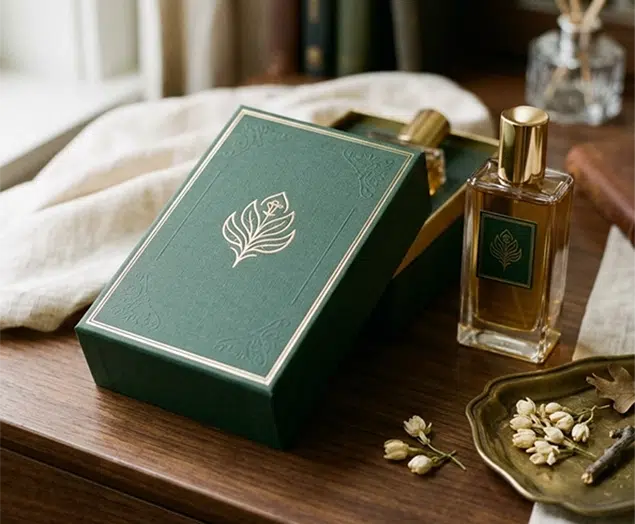
No serious discussion of luxury packaging surface process techniques can conclude without exploring the transformative, historically revered power of hot foil stamping. The incorporation of genuine metallic elements into perfume box printing instantly elevates the perceived value of the product, communicating opulence, deep heritage, or cutting-edge modernity depending on the foil chosen.
-
■
The Warmth and Heritage of Gold Foil:
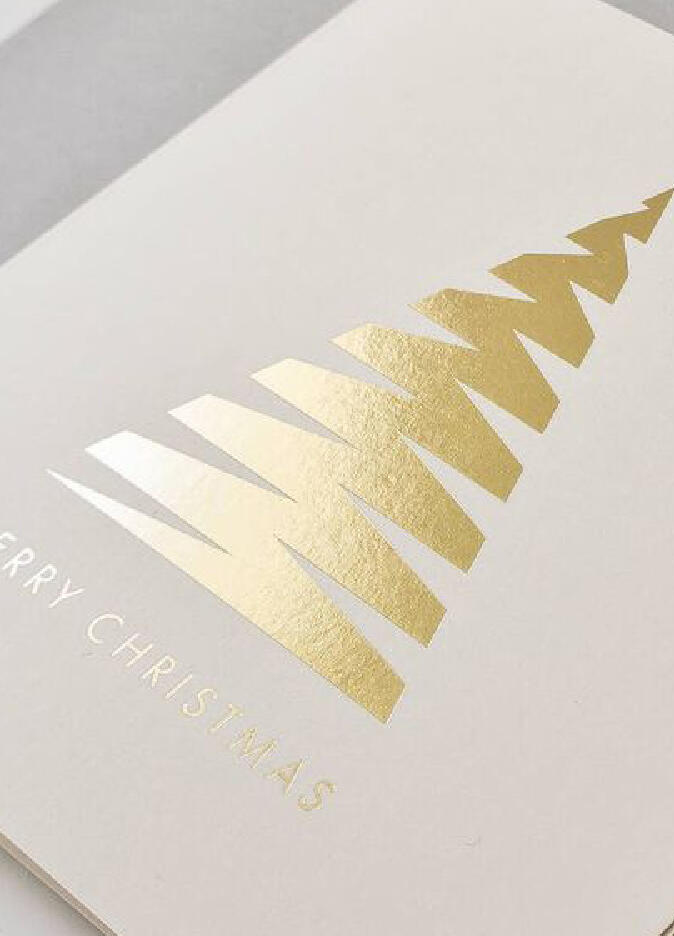
Gold foil stamping utilizes a heated, customized brass or magnesium die to press and thermally transfer a micro-thin layer of metallic gold foil directly onto the surface of the custom made perfume packaging boxes. The result is an unmistakable, brilliant metallic luster that cannot be replicated by standard yellow or ochre printing inks.
-
■
The Sleek Modernity of Silver Foil:
Operating on the exact same thermal and mechanical principles as its golden counterpart, silver foil stamping transfers a silver metallic film onto the packaging material. Silver foil projects a cool, refined, and highly sophisticated tone. Its reflection is softer, more clinical, and often perceived as more modern than gold.
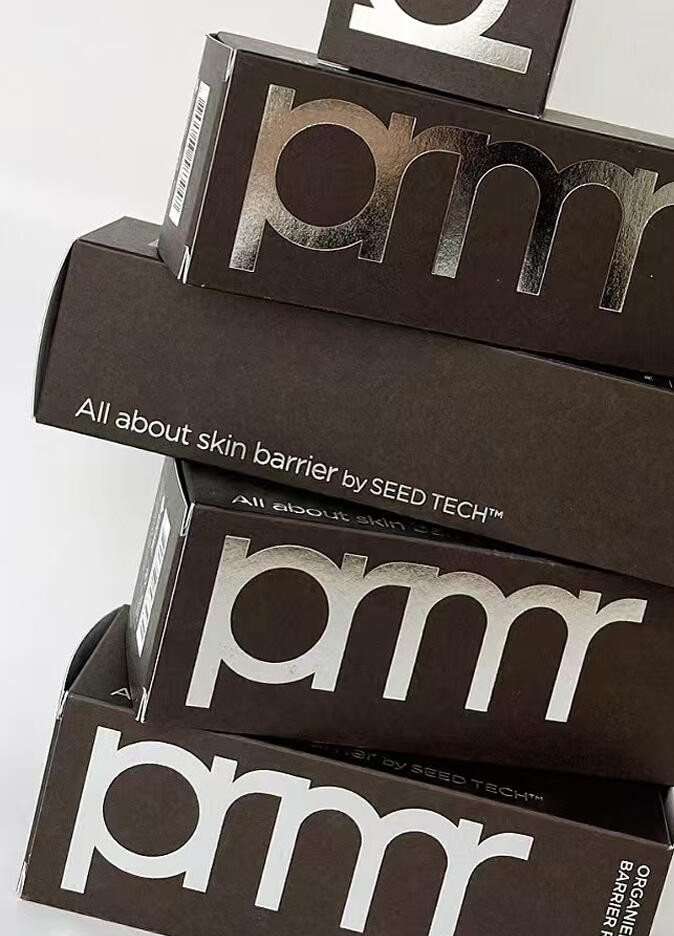


It is the perfect choice for minimalist brands, the rapidly growing “affordable luxury” segment, or fragrances aiming for a futuristic, aquatic, or tech-forward aesthetic. Additionally, metallic foils generally offer scratch resistance that far surpasses standard perfume box printing inks, adding a critical layer of physical durability.
6. Orchestrating the Symphony: Synergizing Packaging Printing Techniques
The true mastery of crafting custom made perfume packaging boxes lies not in simply utilizing a single, isolated packaging surface process, but in orchestrating a symphony of multiple techniques harmoniously. The most memorable and iconic perfume box printing projects combine these elements to tell a cohesive, multi-sensory brand story. Over-engineering a box with every available technique leads to visual clutter; the secret is strategic, intentional application.
Imagine a heavy, charcoal-toned, uncoated specialty paper serving as the base. The brand’s monogram is deeply debossed into the center, anchoring the design. Within that specific debossed area, a sharp, clean silver foil is carefully applied. Surrounding the logo, an intricate, almost invisible floral pattern is applied using Spot UV, which only reveals itself when the consumer tilts the box in the light. Finally, the box features a custom die-cut inner fitment that holds the heavy glass bottle perfectly in place, revealing it like a jewel upon opening.
This intelligent layering of packaging printing techniques transforms a disposable cardboard wrapper into a permanent keepsake. It profoundly prolongs the unboxing experience, slowing down the consumer’s interaction and forcing them to subconsciously appreciate the immense attention to detail. This level of meticulous craftsmanship in perfume box printing builds profound, long-lasting brand loyalty and effortlessly justifies premium retail pricing.
1. What is the most eco-friendly packaging surface process for luxury boxes?
2. How does Reverse UV fundamentally differ from standard Spot UV in perfume box printing?
3. Why might a fragrance brand choose silver foil over gold foil for custom made perfume packaging boxes?
4. Can die-cutting be utilized for more than just altering the outer shape of the perfume box?
5. Do premium specialty papers require highly complex packaging printing to look luxurious?


Top 10 Creative Cosmetic Packaging Design Ideas & illustrations 2023 | Luxury-Paper-Box.Com
How the Right Perfume Packaging Sells the Scent
5 Eyewear Packaging Trends Shaping 2026