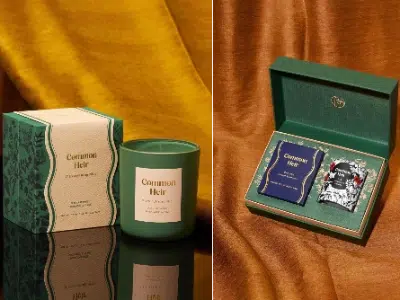


The best Valentine’s gift box design depends on the gift, budget, and shipping risk. For a premium mixed gift, start with a rigid lid-and-base box, a fitted insert, a matte finish, and one foil or embossed detail. Chocolates need a food-safe tray; jewelry needs velvet or foam. Confirm dimensions, minimum order, and material claims with physical samples.
Start with the four choices that shape a Valentine’s box
Before comparing ten directions, settle four decisions: format, finish, insert and fixing, and opening sequence. These determine perceived value, product protection, and production complexity. A heart-shaped box with weak inserts can look premium in a photo and fail in transit. A simple folding box with a precise insert and one strong detail can feel more thoughtful than a busy rigid box. A practical selection logic is to start with a sturdy box, add one strong design detail, and include a small inside surprise such as a note card, QR code, or insert tray; this Valentine’s packaging guide describes that approach.
Format: rigid, lid-and-base, tray-and-sleeve, or folding
Rigid boxes hold their shape, support higher-end finishes, and are easier to keep and reuse. They suit jewelry, skincare, premium chocolates, and gift sets where the box is part of the gift. Lid-and-base is the classic slow-reveal format: the lid lifts away, so the recipient sees tissue, a message, and the product in stages. Because the lid and base are separate, you can contrast colors – blush lid, cream base – and add ribbon, a sleeve, or an inside message. Tray-and-sleeve formats separate the product tray from the outer sleeve; the tray organizes small items and the sleeve slides off for a compact reveal. Folding boxes are lighter, often ship flat, and use less material than rigid setups. They are practical for budget-friendly friend gifting, bakery items, and high-volume seasonal programs, but they offer less structural protection and a less premium hand-feel.
Finish: matte, soft-touch, emboss, foil, or minimal print
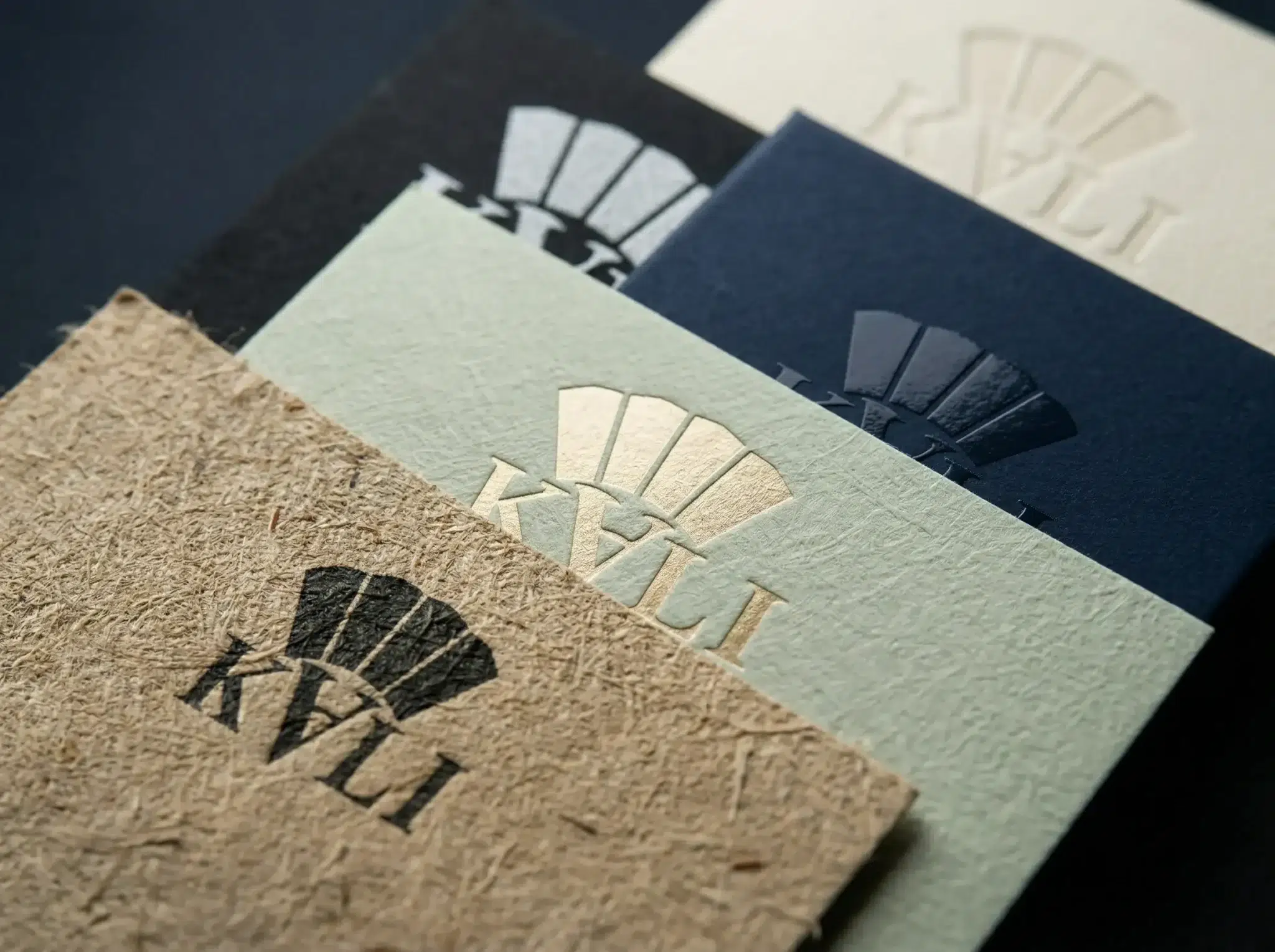
A quiet matte surface plus one tactile or shiny detail often reads as more premium than several competing graphics. Soft-touch coating gives a smooth, quiet hand-feel; an embossed heart adds texture without noise; a thin foil line catches light in photos. A useful modern combination is a matte exterior with one glossy detail, such as a shiny heart outline. Minimal print is stronger when the product itself is colorful – chocolates, cosmetics, or a bright ribbon – or when the brand is pursuing a quiet-luxury look. Use clean typography, soft colors, and one focal detail rather than filling every panel. For tighter budgets, a single-color print on kraft or matte board, plus a sticker or label, can still look intentional. Always request a physical finish sample: matte, soft-touch, emboss, and foil behave differently on coated, uncoated, and recycled boards.
Insert and fixing: foam, velvet, tray, or cavity
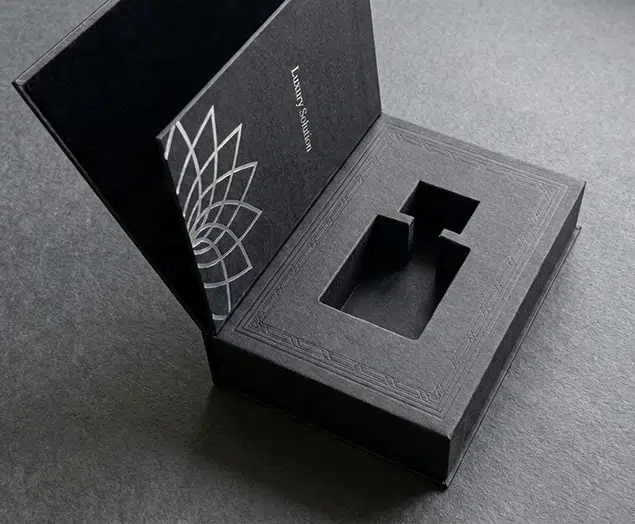
Inserts do two jobs: they keep the gift organized and stop movement in transit. Foam or EVA foam inserts are useful for fragile or shaped items; velvet lining suits rings, necklaces, and bracelets because it protects surfaces and signals care; tray and cavity layouts keep chocolates, wax melts, mini skincare, and small accessories from sliding into one another. A heart-shaped cavity layout or a two-row tray can make a small assortment look deliberate rather than lost inside a large box. Protection, organized inserts, and presentation are core packaging jobs, as this overview of Valentine’s box ideas notes. Match the insert to the product: chocolates and candies need food-safe liners or approved direct-contact materials; jewelry needs a soft, non-abrasive surface; cosmetics need cavities that prevent leakage and rattling. Ask the supplier to fit your actual product sample, not just a dimensional drawing.
Opening sequence: what the recipient sees first, second, and last
Write a simple unboxing storyboard before approving artwork: outer sleeve or ribbon, lid, insert tray, product, note or QR code. The first beat should identify the gift – a name, a short line, or a single graphic. The second beat is the slow reveal: lifting the lid, parting tissue, seeing the tray. The third beat is the personal detail: a handwritten-style note, a care card, or a QR code placed inside the lid or under a flap so it feels like a surprise rather than an advertisement. For two-tier boxes, the top layer can hold chocolates and the bottom layer a small accessory or jewelry, which gives the recipient a second discovery moment. Keep the sequence to a few clear beats; too many layers can slow packing and frustrate the recipient.
The ten designs, compared
Each design below is assessed on box structure, surface finish, insert or fixing method, best gift types, and one cost or sustainability caution. Comparisons stay qualitative because public sources do not give verified price ranges; treat any figure you receive as quote-specific, not standard.
1. Quiet-Luxury Minimal Heart Box
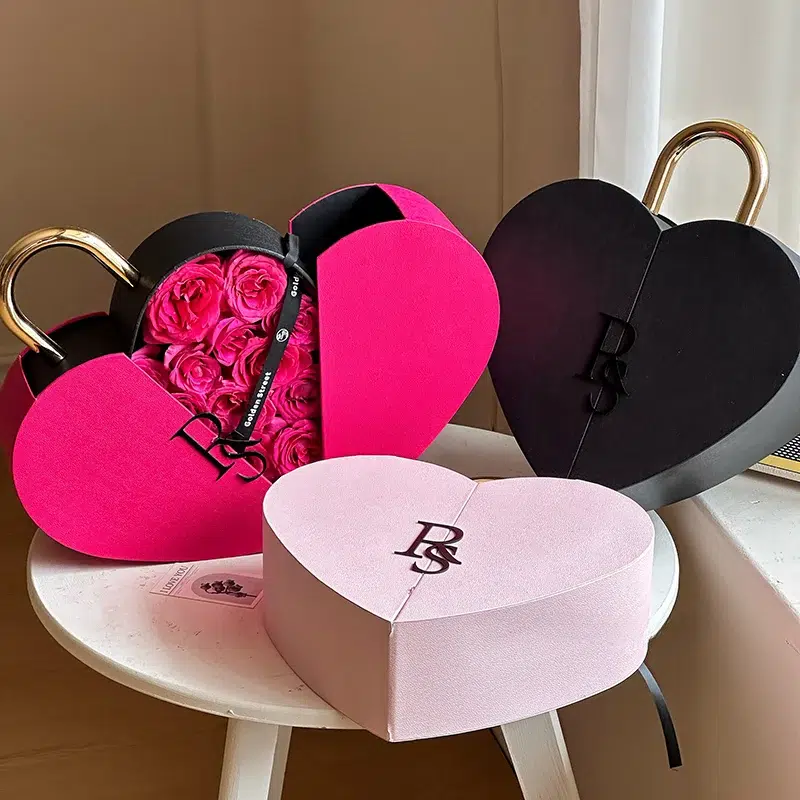
A heart-shaped rigid box with clean type, soft colors, a matte surface, and one strong detail such as a small heart stamp or tiny foil accent. A short line like “For you” often reads as more expensive than a busy print. It suits jewelry, skincare, and premium chocolate.
Caution: every foil pass and print color adds setup cost, and matte lamination can complicate recycling claims, so confirm the finish and substrate with the supplier.

2. Classic Lid-and-Base Rigid Box
A two-piece rigid box where the lid lifts away to create a slower reveal. Contrast lid and base colors, then add ribbon, a printed sleeve, tissue, or an inside message without redesigning the box. It suits mixed gifts, curated sets, and premium pairings where the reveal matters.
Caution: this format uses more material and shipping volume than a folding carton, so keep the box shallow if cube efficiency is tight.


3. Reusable Keepsake Box with Memory Label
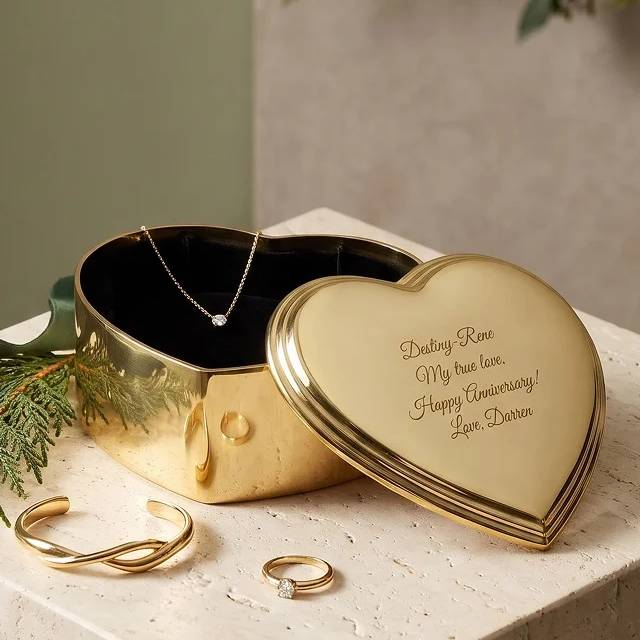
A sturdy box built to be kept: a firm EVA foam insert, a soft-touch wrap, and a small memory label inside the lid recording what the gift was for – “Valentine’s Day 2026” plus a short note. Reuse becomes both the emotional hook and the sustainability story. It suits jewelry, letters, photos, and small keepsakes.
Caution: soft-touch film and foam inserts can affect which recycling stream the box belongs to, so design for durability first if reuse is the main claim.


4. Kraft Rigid Box with Romantic Ribbon
Natural kraft texture dressed up with a deep red ribbon, a heart-shaped tag, or a single-color print such as black ink with tiny hearts. The contrast between an unbleached look and a romantic accent keeps the box warm rather than plain. It suits bakery items, artisan candles, handmade gifts, and rustic-themed sets.
Caution: kraft is not automatically recyclable in every configuration; coatings, windows, ribbon, and foil tags can change the answer, so confirm the full material list.

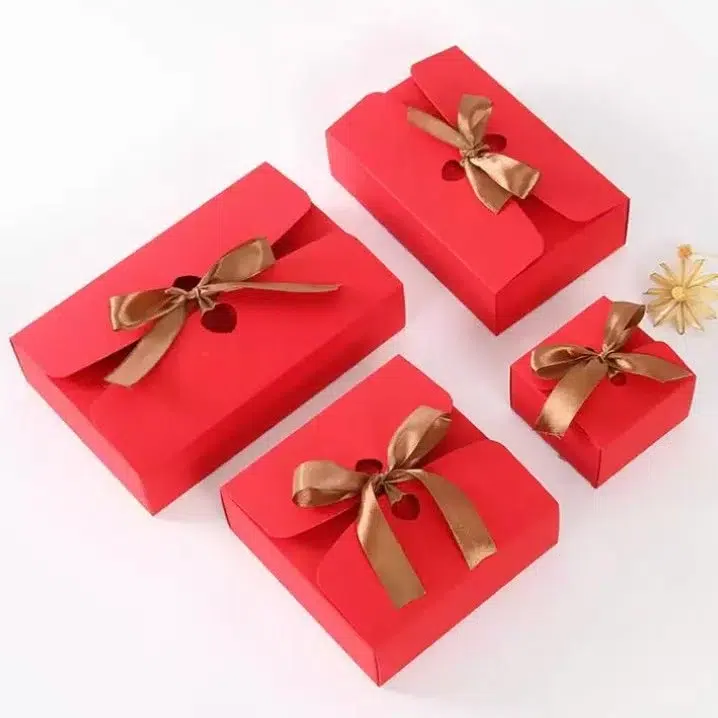
5. Budget-Friendly Sweet Note Sleeve Box
A small box or sleeve carrying one clever line and a mini note card inside. This is a lower-complexity way to feel personal: less surface to print, fewer components to assemble, and a handwritten message doing most of the emotional work. It suits cookies, candy, mini candles, and small add-on gifts.
Caution: the format is simpler, not free – sleeves and stickers still carry setup and minimum-order costs, so confirm quantities before promising a low unit price.

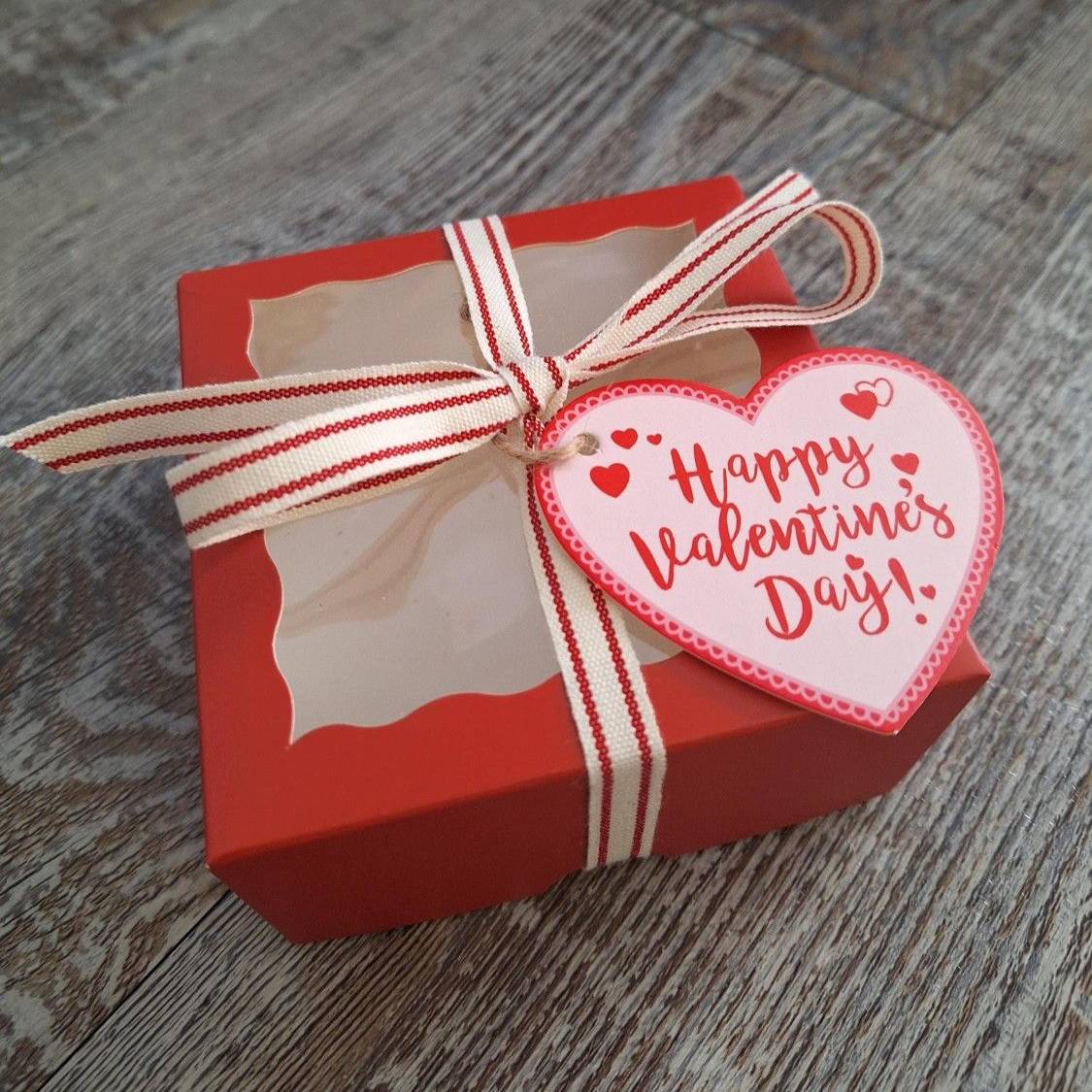
6. Insert-Tray Box for Small Gifts
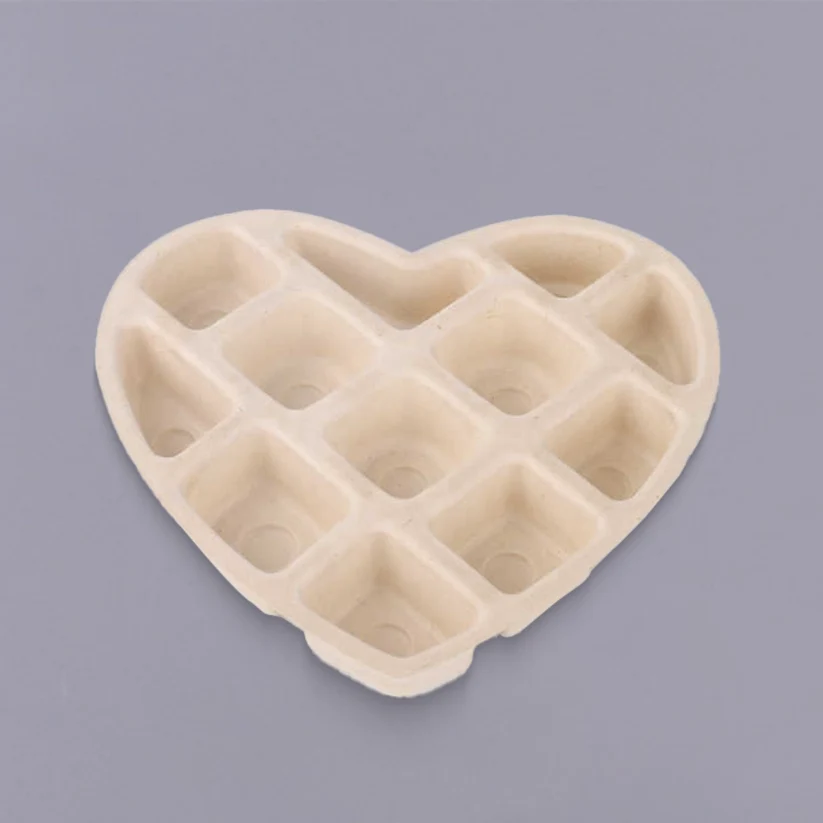
Small items look lost in a large box, so the tray does the organizing. A heart-shaped cavity layout or a two-row tray keeps rings, wax melts, chocolates, and mini skincare items from sliding into each other, and printed liners make the arrangement read as intentional. It suits multi-item sets and mixed gift boxes.
Caution: custom cavities add tooling and hand-assembly time, and a cavity cut for one product rarely fits another; prototype with real products and a drop test.
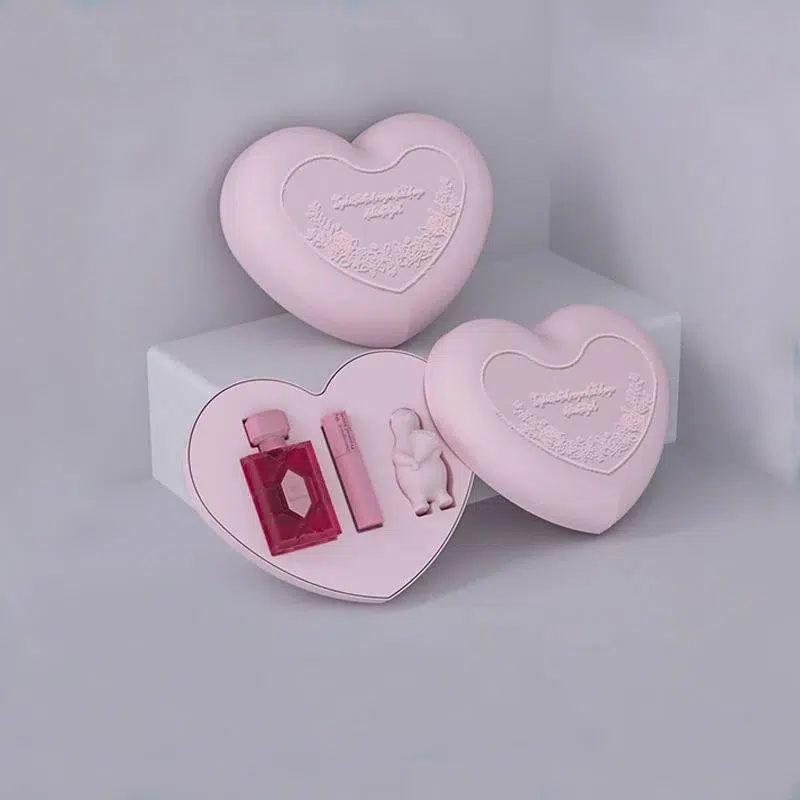
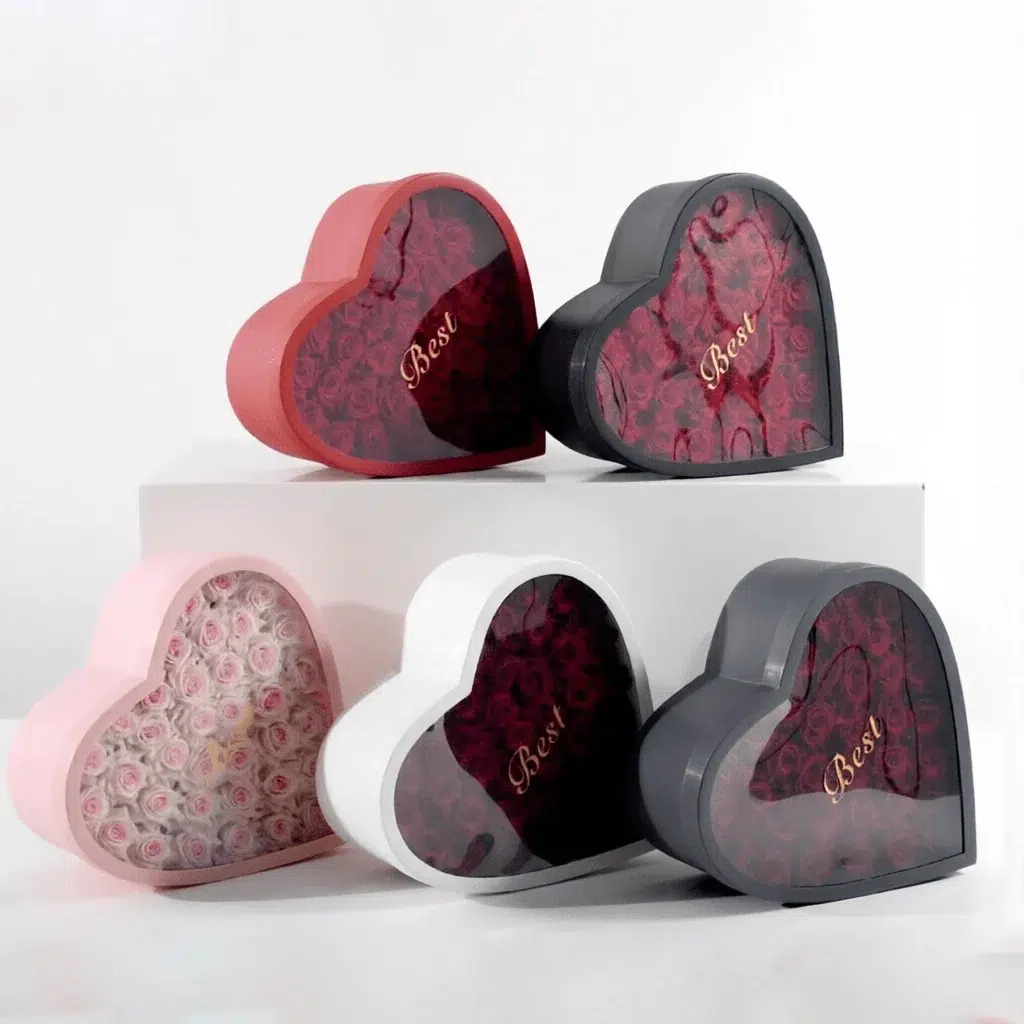
7. Window-Cut Heart Box
A small window – heart-shaped, lipstick-shaped, or a curved smile – covered with clear film lets the recipient see color, texture, or sparkle before the box is opened. A tiny window usually looks more current than a large rectangle. It suits chocolate truffles, bath bombs, and jewelry.
Caution: avoid oversized windows, which weaken the lid and expose the product to handling damage; if you plan a sustainability claim, confirm the film type and how the window is attached.


8. QR-Connected Digital Love Note Box
A QR code placed inside the lid or under a small flap can open a private video message, a playlist, a photo album, or a short story about where the chocolate was made or how to reuse the box. Placed inside, it feels like a surprise rather than an advertisement. It suits all gift types, especially long-distance gifting and brand storytelling.
Caution: a QR code is a maintenance commitment. Links can expire, hosting can lapse, and a code pointing to a dead page is worse than no code. Decide who owns the link and what data the landing page collects.
9. Texture-Play Box: Soft-Touch, Emboss, and Foil
When the box feels good in the hand, it needs fewer graphics. Soft-touch coating, an embossed heart, and a light foil line create a premium impression on a largely plain surface; slipcase boxes hold their shape well and support these finishes. A common pairing is a matte exterior with one glossy detail. It suits jewelry, fragrance, and premium skincare.


Caution: soft-touch surfaces can mark and scuff, and deep embossing stresses the wrap on tight corners; request physical samples and rub-test them before production.

10. Self-Love “Treat Yourself” Ritual Box
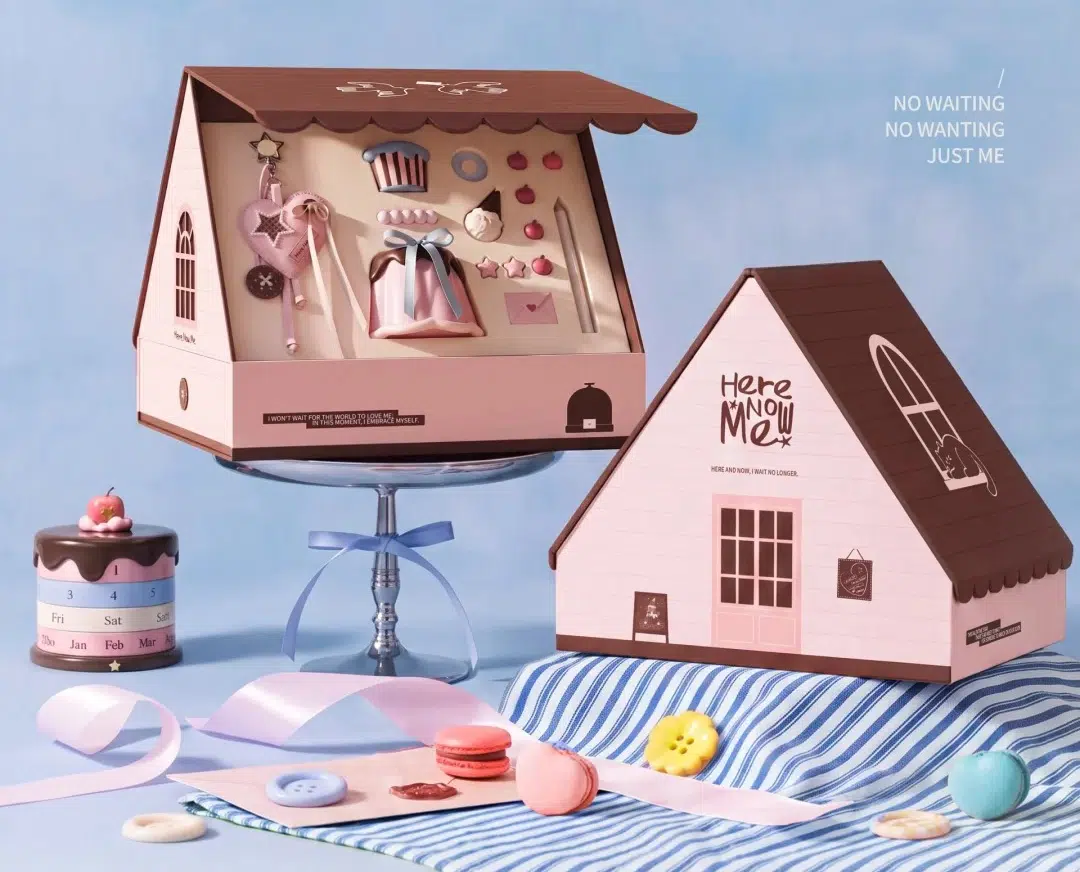
Inclusive messaging – “A little love for you,” “You deserve this,” “Made for your moment” – paired with a small care card explaining how to enjoy the chocolates, store the candle, or reuse the jar. The gift becomes a short ritual rather than a transaction. It suits solo gifting, friend-to-friend and Galentine’s exchanges, and chocolate, candle, or skincare singles.
Caution: keep the care card practical. Avoid medical, therapeutic, or wellness claims you cannot substantiate.
Pair the design to the gift: a practical matrix
The ten designs are formats and finishes. This matrix turns them into a brief you can send to a supplier. Use it as a shortlist to prototype and test – not as a substitute for a physical sample, a drop test, or the compliance checks your market requires.
| Gift type | Box format | Insert / fixing | Finish cue | Designs to pair | Confirm before ordering |
|---|---|---|---|---|---|
| Chocolate and confections | Heart-shaped or rectangular rigid, two-piece | Food-safe tray, cavity layout, or foam pads | Matte with one foil or embossed heart; window optional | 1, 2, 6, 7 | Food-contact status of liner, tray, adhesive, and ink |
| Candles and home fragrance | Rigid or kraft rigid, lid-and-base | Molded or foam insert sized to the vessel | Kraft with ribbon, or soft-touch with a care card | 3, 4, 10 | Heat, weight, and fragrance compatibility |
| Jewelry | Small rigid, magnetic closure or lid-and-base | Velvet- or foam-lined tray with a ring or chain cavity | Soft-touch, emboss, single foil line | 1, 2, 3, 6 | Cavity depth, tangling, tarnish risk |
| Skincare and cosmetics | Rigid with fitted insert | Insert tray; secondary carton for leaks | Clean matte, soft-touch, one glossy detail | 1, 9, 10 | Leak and weight testing; coating scuffing |
| Small fashion and accessories | Tray-and-sleeve or lid-and-base | Size-appropriate insert plus tissue | Matte, emboss, quiet-luxury minimalism | 2, 6, 9 | Whether the box actually protects the item in transit |
| Handmade and mixed gifts | Kraft, reusable, or two-tier | Flexible insert, custom cavities, padding | Natural kraft, handwritten note, message card | 3, 4, 10 | Irregular shapes need a custom cavity, not a generic tray |
Chocolate and confections
Heart-shaped and rectangular boxes are established formats for chocolates and small candies, and a tray or cavity layout keeps pieces from shifting. For bakery-adjacent items such as cookies, snacks, and popcorn, basket-style boxes are another option. The part that cannot be decided from a design brief is food-contact compliance. Liners, tray material, adhesives, and printed inks all sit next to the product, so ask the supplier to confirm the food-contact status of each component for your destination market.
Candles and home fragrance
A kraft rigid box with a ribbon, a reusable keepsake box, or a shallow treat-yourself format with a care card all suit candles. The insert matters more than the finish: a molded or foam insert sized to the vessel stops movement and keeps the wick and lid clear of the box walls. Heat and fragrance compatibility need supplier testing. Wax weight, glass fragility, and whether a coating or insert foam reacts with fragrance oils over weeks in a closed box are all questions for a sample, not a mood board.
Jewelry
Velvet- and foam-lined boxes with magnetic closures are the conventional choice, and a small insert tray with a dedicated ring or chain cavity stops pieces looking lost inside a larger box. Pair a soft-touch or embossed finish with a quiet-luxury layout (design 1), a lid-and-base slow reveal (design 2), a reusable keepsake box (design 3), or an insert-tray format (design 6). When specifying, state the cavity depth and chain layout, not just the box size. Ask for a sample loaded with your actual piece before committing.
Skincare and cosmetics
Rigid boxes with fitted inserts are the standard pairing for cosmetics, and a clean matte or soft-touch surface lets one glossy or embossed detail do the work. Designs 1, 9, and 10 fit best: the finish carries the premium cue, while the insert keeps bottles and compacts upright. Test for leakage, weight, and coating scuffing with the real product, and check whether a secondary carton is needed inside the gift box.
Small fashion and accessories
Tray-and-sleeve boxes and lid-and-base boxes with tissue and a size-appropriate insert suit scarves, gloves, belts, and similar small items. Pair with design 2 for a slow reveal, design 6 if you want the item presented in a tray, or design 9 if texture is the main selling point. Be careful with protection claims: a rigid box adds structure, but a heavy or hard item can still move inside. If the gift is weighty, ask for a drop test rather than assuming the format is sufficient.
Handmade and mixed gifts
Flexible formats work best here: kraft rigid boxes for a warm, natural look, reusable boxes that become part of the gift, or a two-tier box with chocolates on top and a small accessory below. A short note card replaces the need for elaborate print. Mix-and-match boxes with inserts that separate each item are a practical way to package several small pieces together. Irregular handmade shapes rarely fit a generic tray, so plan for custom cavities or padding and prototype with the actual items.
Cost, sustainability, and production checks before you order
Before you approve a quote, turn the shortlisted designs into a production brief. Ask for a cost breakdown by box structure, material, print and finish, insert, assembly, and freight – then compare samples before committing. Confirm your own MOQ, setup fees, sample charges, and whether mixed designs count toward the minimum.
Budget-sensitive choices
If the budget is tight, keep complexity in one place. A printed sleeve over a simple box, one-color print, a mini note card, and a standard insert tray are easier to specify than a fully wrapped rigid box with several finishes. Ask your supplier:
- What is the unit cost at 1000, 5000, and 10,000 pieces?
- Which element drives setup cost: foil stamping, embossing, soft-touch lamination, or a custom insert?
- Can we use a stock insert with a paper wrap instead of a custom cavity?
- Does a smaller box or flat-packed structure reduce freight?
- Are there minimum order quantities per color, finish, or insert type?
Reuse and material choices
Reusable rigid boxes, kraft boxes, and recyclable-material claims are not interchangeable. Rigid boxes are often kept and reused; kraft offers a natural texture; but a finished package may combine board, coating, window film, magnet, adhesive, and foam. Recyclability depends on that whole combination, so do not accept “eco-friendly” as a material specification. Request material composition and board weight, coating type, window film, magnets, adhesives, inks, insert material, recyclability documentation for the complete pack, and food-contact documentation if the box holds unwrapped chocolate.
Sampling checklist: structure, finish, insert, and unboxing
Brief three samples rather than one: your preferred design, a lower-cost version, and a reuse or recycled-content alternative. Test each sample with the actual product, not a stand-in.
- Lid fit: the lid should lift cleanly, align at the corners, and not tear the wrap.
- Insert hold: shake the closed box gently; the product should not shift. Check removal force so the item is secure but not stuck.
- Surface durability: scuff the matte or soft-touch finish with a finger and a tissue; check fingerprints and marks.
- Print and finish: inspect registration, foil edges, emboss depth, and small type.
- Opening feel: note whether the lid releases smoothly and whether a sleeve or ribbon snags.
- Pack-out time: time how long your team needs to insert the product, note card, and care card.
- Shipping fit: pack the sample in its outer carton and check weight, movement, and corner protection.
Record pass/fail results and photograph each sample under the same lighting. If a finish looks premium but scuffs before delivery, it is not the right finish.
Structural sketch and unboxing brief
Give the supplier a one-page sketch brief with outer dimensions, product dimensions, board or wall thickness, lid overlap, insert cavity layout, depth, finger notch, closure type, and print keep-clear zones. Add a five-step opening sequence:
- Remove the sleeve or ribbon.
- Lift the lid.
- Reveal the note card or QR code inside the lid.
- Lift out the insert tray or product.
- Find the care or reuse card underneath.
State clearly that exact dimensions must come from the supplier and the product sample; do not scale measurements from a photo. This brief also makes it easier to compare quotes, because every supplier is pricing the same structure, finish, insert, and opening experience.
A shortlist for your Valentine’s launch
Limit the range to three roles: one premium anchor, one budget option, and one reusable or personalized option. That gives buyers a clear price ladder without forcing every design to do every job.
| Role | Starting point | Best for | Verify before ordering |
|---|---|---|---|
| Premium anchor | Rigid lid-and-base or tray-and-sleeve box; fitted insert; matte wrap plus one foil or embossed detail; note card or QR inside the lid | Jewelry, skincare, premium chocolate | Wrap durability, insert fit, closure feel, sample with the product inside |
| Budget option | Paperboard or kraft box with sleeve, one-color print, sticker, or ribbon | Chocolates, candles, small accessories, friend gifting | Board stiffness, print quality, transit protection |
| Reusable or personalized | Keepsake rigid box with memory label; mini box with name/date sticker; QR-linked note | Handmade gifts, small keepsakes, personal messages | Component-level material claims; whether the box remains useful after unpacking |
Match the shortlist to the gift itself: chocolates need a tray and written food-contact confirmation; candles need a stable insert and enough headspace; jewelry and small fashion items need a snug but easy-to-remove cavity; skincare needs a tray that prevents movement; handmade gifts can use kraft and a simple note. A design is launch-ready only when the box protects the item, opens in the intended sequence, and still looks clean after handling.
FAQ
What is the most popular Valentine gift box design?
There is no single universal design. Heart-shaped rigid boxes and classic lid-and-base boxes are common because they create a recognizable Valentine’s moment, but the better choice depends on the gift. A chocolate assortment usually needs a food-safe tray; jewelry needs a velvet or foam cavity; a candle needs a stable insert and headspace. Choose the structure around protection first, then add the romantic finish.
Do I need a custom insert for every Valentine’s box?
No. A standard paperboard platform, tissue, or stock tray can be enough for sturdy single items. A custom cavity is more justified when the product is fragile, unusually shaped, or part of a multi-item set where movement would look messy or cause damage. Prototype with the real product before paying for a custom die.
Can a kraft Valentine’s box be marketed as recyclable?
Only if the complete pack supports the claim. Kraft board alone is not enough evidence; coatings, laminated windows, ribbon, foil tags, magnets, adhesives, and foam inserts can change how the package is handled. Ask for material documentation for the full pack and avoid a broad recyclability claim until the supplier confirms it for your market.
How early should a Valentine’s box order be placed?
Plan months in advance rather than weeks, especially for custom structures, inserts, and special finishes. Public sources describe seasonal preparation happening well before February, but exact lead times vary by supplier, material, and quantity. Ask for a production calendar with sample approval, print proof, bulk production, and freight milestones before committing to a launch date.